

The experience of bringing home a new kitten brings excitement to cat owners, yet they face an internal conflict when their feline companion reaches adulthood because they question whether their pet is a genuine Maine Coon or an ordinary fluffy house cat.
The popularity of “Gentle Giants” has reached extraordinary levels which causes people to search for is my cat a Maine Coon after they observe a cat with a bushy tail or tufted ears. The myth that all tabby cats display “M” shaped forehead markings proves false because real Maine Coons show distinct biological characteristics which differentiate them from standard Domestic Longhairs.
In this guide, we’ll break down exactly how to tell if a kitten is a Maine Coon using anatomical markers, growth patterns, and breed-specific traits.
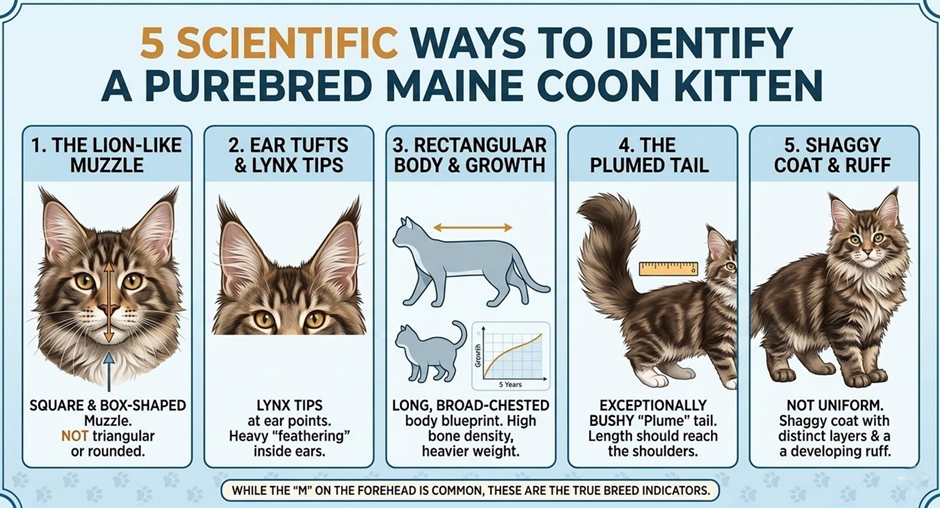
5 Scientific Ways to Identify a Maine Coon Cat
1. The Head: The “Lion-Like” Muzzle
A purebred Maine Coon cat shows its most special characteristic through its “boxy” muzzle structure. The cat breed displays a square chin appearance which differs from the triangular and tapered face structure that most cats possess.
The kitten’s side view should show a straight vertical line which connects his nose to his chin. A soft rounded muzzle shape indicates possible Maine Coon ancestry because a slight taper usually denotes crossbreeding. The “lion-like” appearance of purebred dogs remains visible from the time they reach 12-week age. The high and prominent cheekbones of the animal serve as the foundation for its future development into an enormous size.
2. The Ears: Lynx Tips and Heavy Feathering
If you are wondering if my kitten is a Maine Coon, look at the tips of the ears. The presence of “Lynx Tips” requires you to search beyond the ear fur which exists in many long-haired cats because this feature includes small tufts of fur that extend from the ear’s highest point.
The tips of the ear serve as a functional trait which originated from their ancestors who lived in the snowy environments of Maine. The ears of the cat breed should maintain their large size while being positioned at a height that reaches above the head. The ears of young kittens appear oversized for their body size just as puppy dogs display oversized paws.
3. The Body: The Rectangular Blueprint
The body shape of Maine Coons differs from standard feline body shapes because they have a rectangular body shape. Their bodies display long dimensions together with broad chests and solid bone structures. The weight of your kitten will help you identify its breed because most breeds have different bone densities.
Because these “Gentle Giants” grow significantly faster and reach weights of up to 25 lbs, their physical needs are vastly different from a 10 lb house cat. From a young age, their joints and spine require superior support to prevent long-term issues; standard pet store cushions often flatten under their weight, so look for extra-large cat beds specifically designed for high-weight breeds to ensure their skeletal health during the long growth phase.
4. The Tail: The “Plume” Factor
A Maine Coon’s tail is one of its most majestic features. If you are still asking is my cat Maine Coon, try this test: Gently bend the tail back in the direction of the head. In the case of purebreds, it should reach the shoulder and probably the ear.
The tail has an extremely bushy appearance which people often refer to as a “plume.” The cat uses its thick insulated tail for sleeping in snow because it needs to keep warm while it sleeps. Your cat belongs to the Domestic Longhair breed or its mix when its tail appears thin or short.
5. The Shaggy Coat: Not All Fur is Equal
Maine Coons possess a nonstandard coat pattern. Their coat presents a “shaggy” appearance which consists of three separate layers. The kittens display a fur pattern which shows shorter fur on their shoulders while their stomach and back legs develop longer hair which creates a “britches” effect.
The main feature which defines the coat as its most distinctive element displays itself through the “ruff” which creates a lion-like mane around the neck. The ruff reaches its complete development at 1 to 2 years of age yet the 4-month-old kitten already displays its initial stages of growth.
If you want to ensure your pet develops this legendary look, it is essential to source your pet from breeders like Affordable Maine Coon Kittens where they focus on these specific coat textures and genetic markers. This ensures you are getting a true representative of the breed without the inflated “boutique” pricing often found elsewhere.
Why the “Is My Cat a Maine Coon” Question Matters
Many owners find themselves asking if my cat is Maine Coon because they notice a “dog-like” personality. Maine Coons are known for following their owners through different rooms while they play fetch and show interest in water activities.
The identification process depends on visual identification because it serves essential health purposes. Maine Coons require special dietary and environmental conditions because they continue to grow until they reach five years of age which is different from the one-year growth period of standard cats. You will spend 20 years with one of the most intelligent and loyal dog breeds after you verify that your kitten has a square muzzle and lynx tips and rectangular body.
Summary Checklist: How to Tell if a Kitten is a Maine Coon
- Muzzle: Square and boxy, not triangular.
- Ears: High-set with prominent Lynx tips on the points.
- Tail: Bushy and as long as the entire body.
- Feet: Large, tufted “snowshoe” paws.
- Body: Long and heavy, not petite or round.
You can enable your kitten to succeed when you first identify its characteristics which need proper treatment. The Maine Coon breed shows exceptional qualities because of its distinct biological features which make it suitable for both show purposes and better understanding of rescue cats.
Finding Your Giant: Understanding the Maine Coon Cat Price
When transitioning from identifying these traits to bringing a kitten home, understanding the Maine Coon cat price is the next logical step. A fair market price for a purebred kitten typically accounts for the extensive health screenings and pedigree documentation required to maintain the breed’s scientific standards. By focusing on these genetic markers and physical characteristics, you ensure that your investment results in a healthy, “Gentle Giant” that will be part of your family for nearly two decades.
Read more article about Choose the Right Cattery to Give Every Maine Coon Kitten a Healthy, Balanced Start