
Few things cause more avoidable digestive trouble in dogs than a change of food done too quickly. Whether the shop has run out of the usual kibble, a vet has recommended something different, the family has decided to try a new brand, or a puppy is moving on to adult food, the moment of switching is when a lot of dogs develop loose stools, wind and a rumbling stomach. Owners often assume the new food does not agree with their dog, when the real issue was simply the speed of the change.
This guide explains why sudden diet changes upset dogs, how to plan a transition that keeps the gut settled, and what to do if things go wrong along the way. It is written for UK owners and takes into account the way pet food is labelled and regulated here, so you can tell the difference between a complete food, a complementary food and a treat, and understand what supportive products such as Probiotic Dog Treats can and cannot do during a switch.
Why a Sudden Change Upsets the Gut
A dog’s digestive system is remarkably adaptable over time, but it does not like surprises. Two things have to adjust when the diet changes. The first is the dog’s own digestive machinery: the enzymes secreted by the pancreas and the lining of the small intestine are produced in proportions suited to the food the dog has been eating. A shift from a chicken and rice kibble to a fish and potato recipe, or from dry to wet food, changes the balance of protein, fat, fibre and carbohydrate arriving in the gut, and the enzyme output takes time to catch up.
The second, and arguably more important, adjustment happens in the gut microbiome. Trillions of bacteria living in the intestines feed on whatever the dog cannot digest itself, and the mix of species is tuned to the current diet. Change the diet abruptly and the bacteria that thrived on the old food are suddenly short of their preferred fuel, while species that prefer the new ingredients have not yet multiplied to take advantage. During this gap, fermentation becomes erratic, gas production rises, water is drawn into the colon and the result is soft stools, wind and gurgling. Research in dogs has shown measurable shifts in the microbiome within days of a diet change, and a period of several weeks before a new stable balance is reached.
Some dogs cope with all this without a visible problem. Others, particularly those with sensitive stomachs, puppies, older dogs and breeds with a known tendency towards digestive trouble, show it clearly. Even in dogs that look fine, a gradual change is kinder to the gut.
The Seven-to-Ten-Day Transition
The standard advice from vets and manufacturers is to blend the old and new foods over seven to ten days, gradually shifting the proportions. A common schedule runs roughly as follows. On days one to three, feed about three-quarters old food and one quarter new. On days four to six, move to half and half. On days seven to nine, feed one quarter old and three-quarters new. From day ten, feed the new food alone. If at any stage stools become loose, hold at the current ratio for another two or three days before moving on, rather than pushing ahead.
Dogs with a history of sensitivity benefit from a slower schedule of two to three weeks, moving the ratio by about ten per cent every couple of days. Puppies moving from puppy to adult food, and adult dogs moving to a senior recipe, can follow the same principles. There is no prize for speed.
Keep everything else constant while you transition. This is not the week to introduce new treats, change the water source, alter mealtimes or start a new supplement, because if something does go wrong you want to know what caused it. Feed at the same times each day, measure portions accurately, and note the condition of your dog’s stools so you can see trends rather than reacting to a single soft one.
Understanding UK Pet Food Labels
A little label literacy makes transitions easier. In the UK, pet food is regulated as animal feed, overseen by the Food Standards Agency, the Animal and Plant Health Agency and local Trading Standards, with the industry body UK Pet Food providing detailed guidelines on labelling. Every product must state whether it is a complete pet food, meaning it provides all the nutrients a dog needs when fed as the sole diet, or a complementary pet food, meaning it is designed to be fed alongside other food and is not nutritionally complete on its own. Treats, toppers, chews and most supplements fall into the complementary category.
When you switch main foods, make sure both the old and new products are complete foods for your dog’s life stage. Moving from a complete food to a complementary one as the main diet is a nutritional mistake as well as a digestive risk. Check the composition list, which must be given in descending order by weight, and the analytical constituents, which give the percentage of protein, fat, fibre and ash. A big jump in fat content is a frequent cause of transition trouble, particularly in dogs prone to pancreatitis, so compare the figures before you buy rather than after the first loose stool.
Where Probiotic Treats Fit Into a Transition
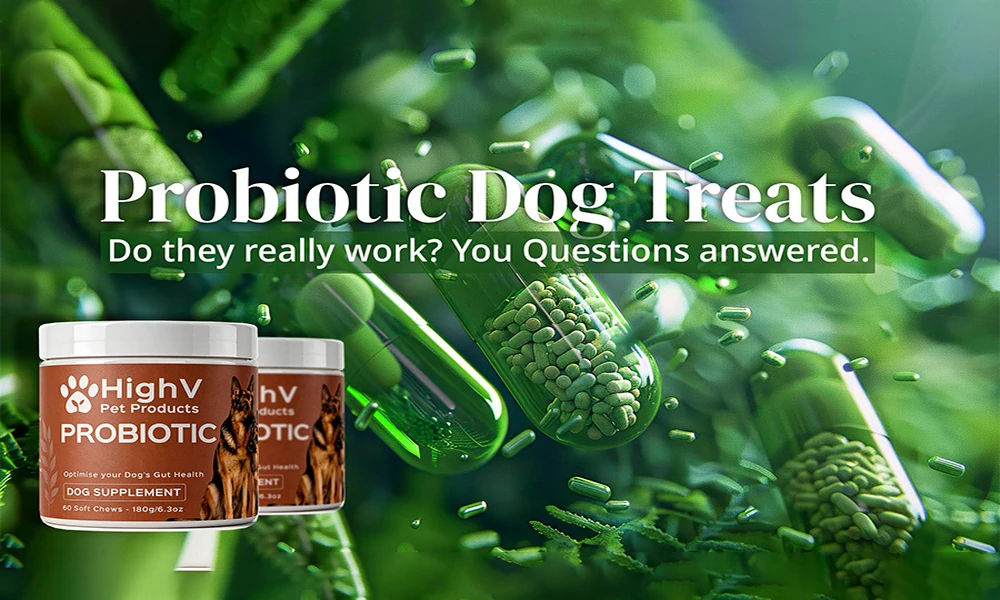
Because the gut microbiome is at the heart of transition upsets, many owners look for ways to support it while the diet changes. Probiotic treats have become a popular option. These are complementary pet foods containing live beneficial microorganisms that have been authorised as feed additives in the gut flora stabiliser category. The most widely used authorised strain in dog products is a specific strain of Enterococcus faecium, and a good product will name its strain and state the guaranteed number of live organisms per treat to the end of shelf life.
The important thing to understand is what these products are and are not. They are feed, not medicines. The Veterinary Medicines Directorate (VMD) is the UK regulator for veterinary medicines, and a product that claims to treat, cure or prevent illness needs a VMD marketing authorisation. A probiotic treat holds no such authorisation and cannot legally claim to stop diarrhoea, treat colitis or prevent a food reaction. What a responsibly labelled treat can say is that it supports normal digestive function or helps maintain a balanced gut flora. Owners should read those words literally and expect no more.
Used within those limits, a probiotic treat is a sensible companion to a diet transition. The practical approach is to introduce the treat a week or two before you begin changing the main food, so the treat itself is not a new variable during the switch, and to continue feeding it daily throughout the transition and for a few weeks afterwards while the microbiome settles. Feed according to the pack guidance for your dog’s weight, keep the treat within the usual limit of no more than ten per cent of daily calories from treats, and store it as directed to protect the live bacteria. If your dog is already on a veterinary diet or a vet-recommended probiotic, ask the practice before adding anything.
Special Cases: Puppies, Seniors and Sensitive Dogs
Puppies are transitioning constantly, from milk to weaning food to puppy food and eventually to adult food, and their gut microbiome is still developing. Keep their changes slow and their diet simple, and be especially alert to diarrhoea, because puppies dehydrate quickly. Any puppy with persistent diarrhoea, vomiting or lethargy needs a vet promptly, and parvovirus must always be ruled out in the unvaccinated.
Senior dogs often have less digestive reserve, may be on medication and may have reduced appetite. A move to a senior diet, or to a softer food for a dog with dental problems, should be gradual and can be helped by warming wet food slightly to release aroma. Dogs with diagnosed conditions such as pancreatitis, inflammatory bowel disease, kidney disease or food allergy should only change diet under veterinary guidance, and in the case of allergy, the switch to a hydrolysed or novel-protein diet is itself a diagnostic tool, so no other foods or treats should be introduced during the trial period.
When a Transition Goes Wrong
Mild, short-lived soft stools during a switch are common and usually resolve by pausing at the current ratio or stepping back to the previous one for a few days. Offer smaller, more frequent meals and make sure water is always available. Do not withhold food for prolonged periods, especially in puppies and small breeds. Once stools firm up, resume the transition more slowly.
Contact your vet if diarrhoea persists beyond 24 to 48 hours, if there is vomiting alongside it, if you see blood or a black tarry appearance in the stools, if your dog is lethargic, refusing water or showing abdominal pain, or if the dog is very young, elderly or has an existing health problem. These signs suggest the problem is not simply the food change, and they need proper assessment. A vet may also want to check for parasites or infections that coincidentally flared during the switch.
If your dog repeatedly fails to settle on a new food despite a slow transition, the food itself may not suit that individual dog, and there is no shame in returning to something that worked. Note which ingredients were in the problem food and mention them to your vet, because a pattern of reactions to a specific protein or grain can point towards an intolerance worth investigating properly.
Final Thoughts
Changing a dog’s food is one of the most common triggers of digestive upset, and one of the most avoidable. The gut, and especially the community of bacteria living in it, needs time to adapt, and a seven-to-ten-day blend, extended for sensitive dogs, gives it that time. Keep everything else stable during the switch, understand the difference between complete and complementary foods on the label, and compare fat and fibre levels before you commit. Probiotic treats can play a supporting role by making it easy to feed an authorised gut flora stabiliser every day through the transition, as long as you remember that they are complementary pet foods rather than medicines and that a dog that becomes unwell needs a vet rather than a different treat. Done patiently, a food change can pass without your dog noticing anything at all, which is exactly how it should be.